
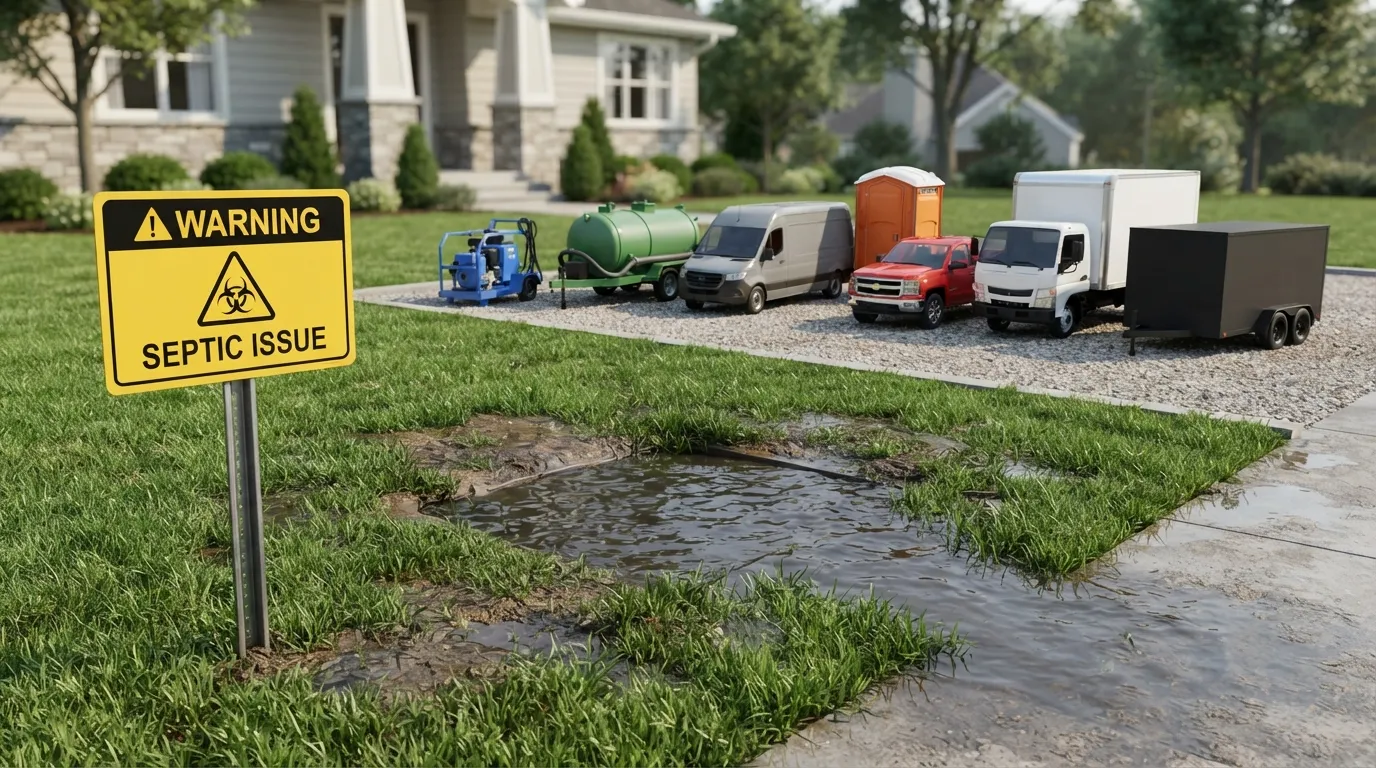
What are the early warning signs of a full septic tank?
The first clue is usually sound, not smell. Gurgling in the pipes when nobody's running water means air is fighting sewage somewhere in the line. Slow drains across multiple fixtures at once, not just one sink, point to the tank rather than a local clog. Grass that's greener and lusher right over the drain field, even in a Pembroke Pines dry spell, means the field is leaking nutrients it should be filtering. Standing water or soft, spongy ground near the tank is a later stage sign, and by that point you're close to backup. If you're running a construction crew or hosting an event and the fixed system can't keep up, a holding tank rental or a bank of portable restroom rental units buys time while you sort out the tank. For food service tied to the same line, a grease interceptor gets pumped once fats, oils, grease and solids reach 25 percent of the liquid depth, and skipping that check is a common reason a "septic problem" is actually a grease trap pumping problem instead. Homeowners in Cooper City, 6.7 miles northeast of Pembroke Pines, and in Country Club, 7.0 miles south, deal with the same tank sizes and the same warning signs, so the timeline holds across the area.
Why does my yard smell like sewage near the tank?
Because gas is escaping somewhere it shouldn't. A tight lid and clear vent stack should keep sewer gas moving up and out, not sideways into your yard. When the tank is overfull, gas pressure finds the path of least resistance, often a hairline crack in the lid or a loose riser. That smell after rain is a strong tell, since saturated soil traps gas at ground level instead of letting it dissipate. Pembroke Pines sits low and flat, and heavy rain events push groundwater up around drain fields faster than in drier inland towns, so a smell that shows up only after storms usually means the field is saturated, not necessarily that the tank is full. Either way, don't wait. Check our septic tank pumping cost guide to budget the fix, and if the smell is constant rather than storm-triggered, treat it as a same-day call. For active job sites nearby that can't have a septic failure shut down work, emergency septic service and a temporary septic pumping service visit keep things running while a technician diagnoses the tank itself.

How often should a septic tank actually be pumped?
Every 3 to 5 years for a standard residential tank, though tank size and household size push that window in either direction. A bigger household with a smaller-than-ideal tank might need service closer to the 3 year mark; a couple in a house built with a generous tank can often stretch toward 5. Waiting for visible warning signs before you call means you've likely already let solids build past the point of easy pumping, which raises the odds of a clogged drain field. Our how often to pump a septic tank page walks through how to estimate your own interval from tank size and daily water use. If you're mid-renovation and the bathroom is torn out anyway, pair the pump-out with a temporary porta john rental or a standard porta potty rental so the crew isn't waiting on you to solve two problems at once. Homeowners doing a full remodel often add dumpster rental cost planning and a 10 yard dumpster rental to the same punch list, since bathroom demo debris and septic access work tend to land in the same week.

Can a full septic tank cause damage if I ignore it?
Yes, and the damage moves from cheap fix to expensive fix fast. A tank that backs up into the house means sewage in your plumbing, sometimes in the lowest drain in the building. Left longer, an overloaded drain field can fail outright, and drain field replacement costs far more than a pump-out ever would. Sustained water intrusion into a septic system also compromises septic tank cleaning down the line, since built-up sludge only gets harder to remove once it's had years to compact. Anyone running hand-labor crews on adjacent land should also know that agricultural operations fall under OSHA 1928.110, which requires potable water, toilets and handwashing within a quarter mile walk of workers, at one facility per 20 employees, separate from whatever is happening with the home septic system. If your property backs onto a work site or you're hosting a crew while the tank issue gets resolved, our septic tank cleaning team can coordinate both jobs in the same visit.
How much does septic tank pumping cost in Pembroke Pines?
A standard day-rate pump-out for a residential tank runs in the $150 to $300 range depending on tank condition and access. Weekend service, when the tank can't wait for a weekday slot, typically runs $50 to $150 as a separate call-out. Ask about combining it with a septic tank pumping cost estimate up front.
What's the difference between a septic backup and a clogged drain?
A clogged drain affects one fixture; a septic backup affects several at once, often the lowest drains first. If two or more fixtures slow down together, treat it as a tank issue, not a plumbing snake job.
Do I need a permit to have my tank pumped in Pembroke Pines?
Pumping itself generally doesn't need a permit, but any drain field repair or tank replacement should be confirmed with the city first. Check porta potty permit requirements for how permitting questions get handled on related site work.
Can I use a portable toilet while my septic system is being repaired?
Yes. A standard porta potty rental or deluxe flushable porta potty keeps a household functional during drain field repair, and rentals scale from a single unit to a full restroom trailer rental for larger households or longer repairs.
How do I know if it's the tank or the drain field?
Gurgling and slow multi-fixture drains point to the tank. Soggy ground, lush grass patches and standing water over the leach lines point to the drain field. Both often fail together if the tank problem went unaddressed too long.

Next step
Get a delivery date
Tell us the address, the dates and the headcount. We size the order and confirm the route.