
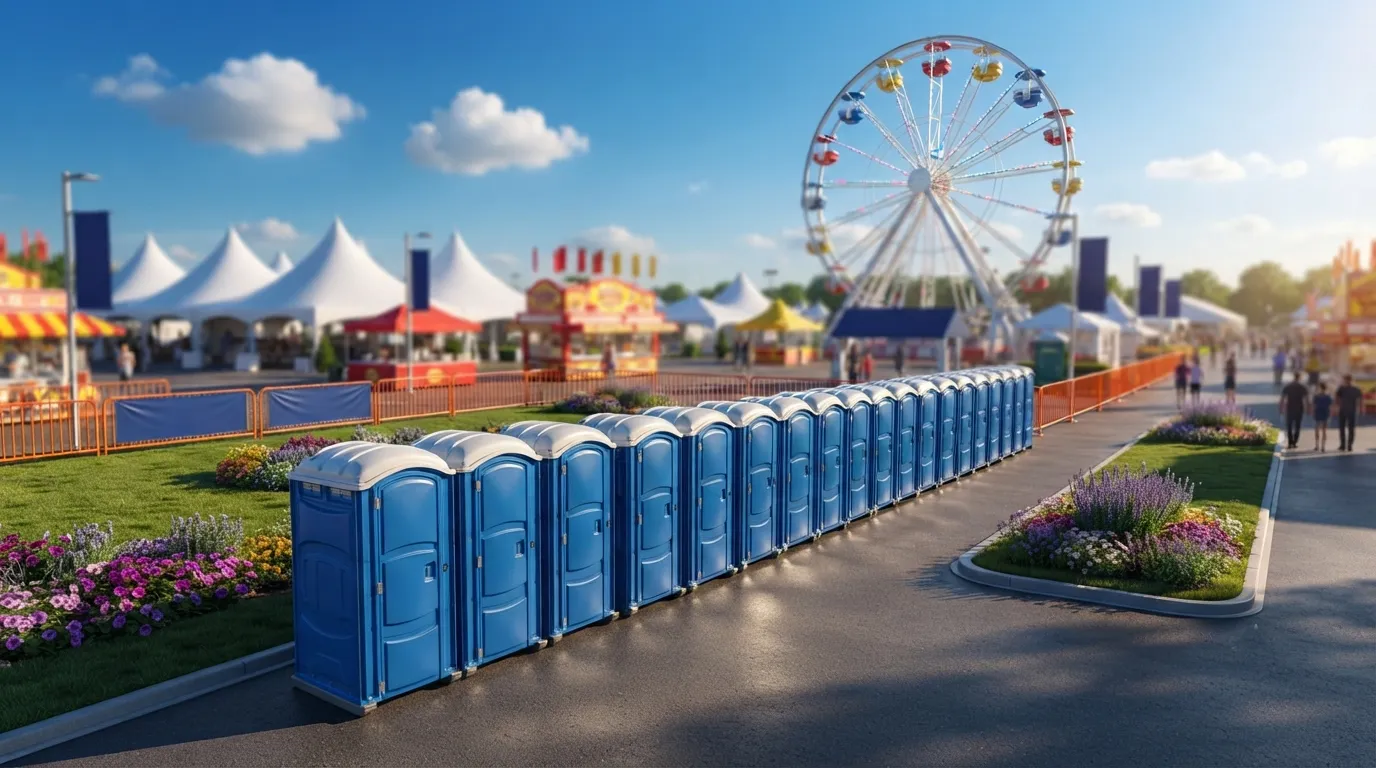
How many restrooms does a county fair need?
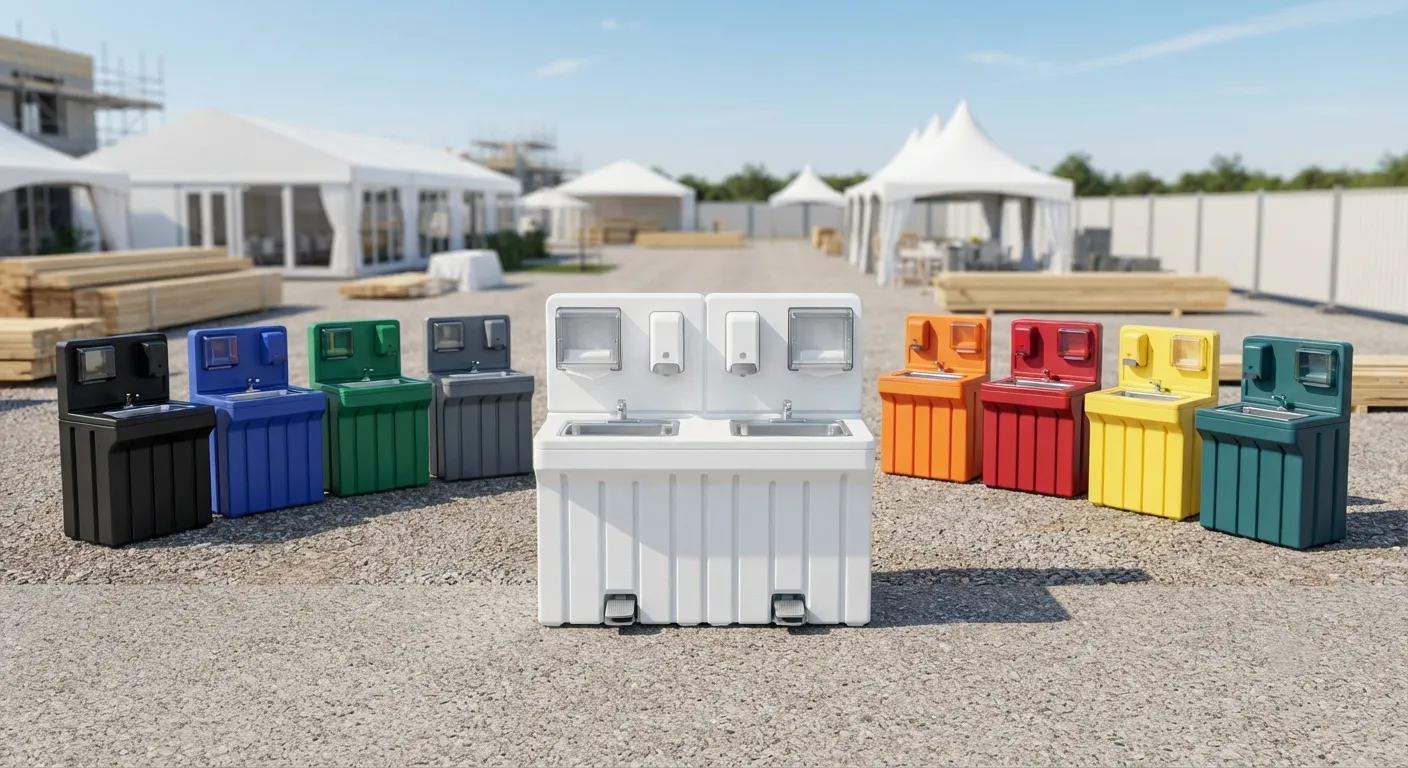
Start with the crowd curve, not the total attendance number. A fair that draws 5,000 people over a Saturday might only have 1,200 on site at any given hour, and that hourly peak is what should size your order, the same logic covered on how many porta potties do I need. OSHA 1926.51(c) sets the baseline ratio for worker crews at 1 toilet per 20 workers, which is a fair starting reference even though fairgoers are the bigger population to plan around. Vendors handling fryers and grills add wastewater load fast, so pair your restroom count with a look at grease trap pumping if food trucks are running on-site tanks. For a multi-day fair in Pembroke Pines, we usually recommend spreading units across at least two zones: one near the midway, one near vendor row, so nobody's walking the length of the grounds. A portable restroom rental plan built this way also cuts line length, since crowds bunch fastest around a single bank of units. If your fair includes livestock barns or a 4-H area, treat that as a third zone entirely; animal handlers and families with strollers need a shorter walk, not a shared line with midway traffic. Add handwashing station rental units near any food zone and near livestock, since ANSI/PSAI Z4.3 sets a one-visit-per-week service baseline for units serving up to 10 users over a 40 hour week, a pace fair traffic will outrun and require adjusting upward.
What restroom types work best for a fair crowd?
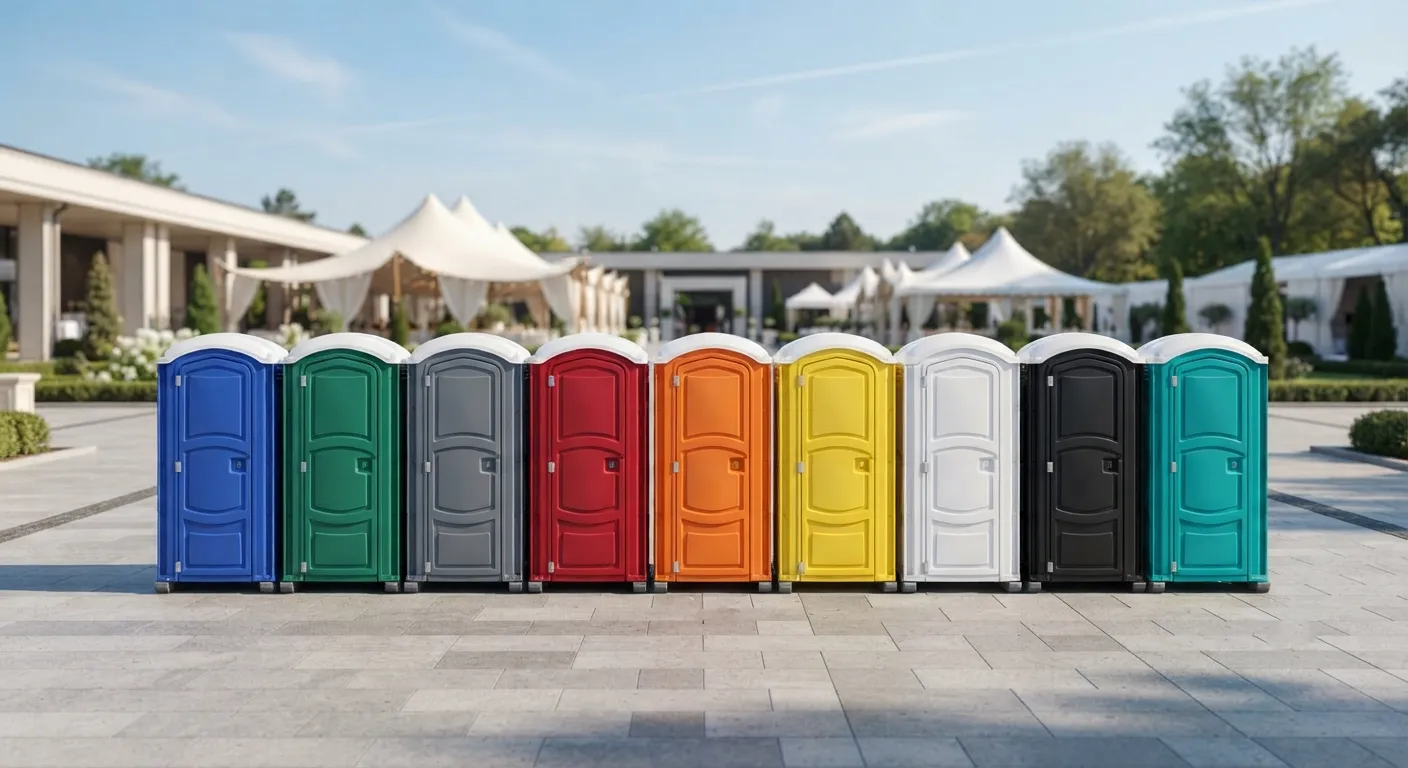
Mix your fleet instead of ordering one type across the board. Standard porta potty rental units cover the bulk of general foot traffic, and each one holds a 60 to 70 gallon tank on a footprint of about 44 by 48 inches, so they fit tight rows without eating walkway space. For VIP areas, sponsor tents, or a beer garden, step up to a deluxe flushable porta potty or a full restroom trailer rental; a multi-day fair with a ticketed VIP section often justifies a 4 stall restroom trailer or 8 stall restroom trailer run near that entrance. ADA Standards section 213.2 requires that at least 5 percent of clustered single-user units be accessible, with a minimum of one no matter how small the cluster, so even a modest fairground order needs an ADA accessible porta potty placed on level, stable ground per ADA Standards 302.1. Keep the accessible route clear too: ADA Standards 403.5.1 calls for a minimum 36 inch clear path, which matters on grass lots where cabling and stakes tend to creep into walkways. If your fair runs a shower option for staff or performers camping on site, a shower trailer rental solves that without pulling water from vendor lines.
Why plan county fair sanitation early with Pembroke Pines Porta Pros?
Fairgrounds book out fast in peak season, and restroom trailers especially need lead time since delivery trucks want roughly 60 feet of straight clearance to position safely. Pembroke Pines sits close enough to draw crews and trailers from Cooper City, 6.7 miles northeast, and Southwest Ranches, 8.0 miles northwest, which keeps delivery windows tight even during a busy fair calendar. Early planning also gives us room to walk the grounds with your fair committee and mark placement against the porta potty placement guide, checking ground stability, generator runs, and lighting per OSHA 1926.56(a) if any restroom zone sits away from existing site lighting. A fair that runs after dark needs that illumination check taken seriously, not assumed. We also plan servicing intervals ahead of gate opening rather than reacting mid-event, since a fair's actual usage almost always beats the ANSI/PSAI Z4.3 baseline interval built for office-style traffic. If your event footprint includes a fenced perimeter or crowd lanes, add temporary fence rental or crowd control barrier rental to the same site visit so barricades meet OSHA 1926.202 and restroom lines don't spill into traffic paths. For fairs with overnight security or ticket booths needing lockable storage, a storage container rental rounds out the site plan in one delivery run.
Frequently Asked Questions
How far ahead should we book restrooms for a county fair?
Book as soon as your date and expected attendance are set, ideally before vendor contracts finalize. Restroom trailers move fast in peak season, and delivery trucks need about 60 feet of clearance to place equipment. Early booking also locks in the right unit mix instead of scrambling for leftovers.
Do we need ADA-accessible units at a fair?
Yes. ADA Standards section 213.2 requires at least 5 percent of a clustered group of single-user units to be accessible, with a minimum of one regardless of total count. Placement also needs a stable surface under ADA Standards 302.1 and a 36 inch clear route per section 403.5.1.
Can we get handwashing stations near food vendors?
Yes, and it's worth doing regardless of a specific washing mandate. Handwashing station rental units pair well with grease-heavy vendor rows, and 29 CFR 1910.141(d)(2) requires soap and towels or a hand-drying device wherever washing facilities are provided, not sanitizer alone.
What if the fair runs multiple days?
Multi-day fairs need a servicing plan built around actual traffic, not the ANSI/PSAI Z4.3 baseline meant for standard office-style use over a 40 hour week. We schedule extra service visits and can swap in a monthly porta potty rental structure if the fair runs into a longer seasonal event.
How do we estimate cost for fair restrooms?
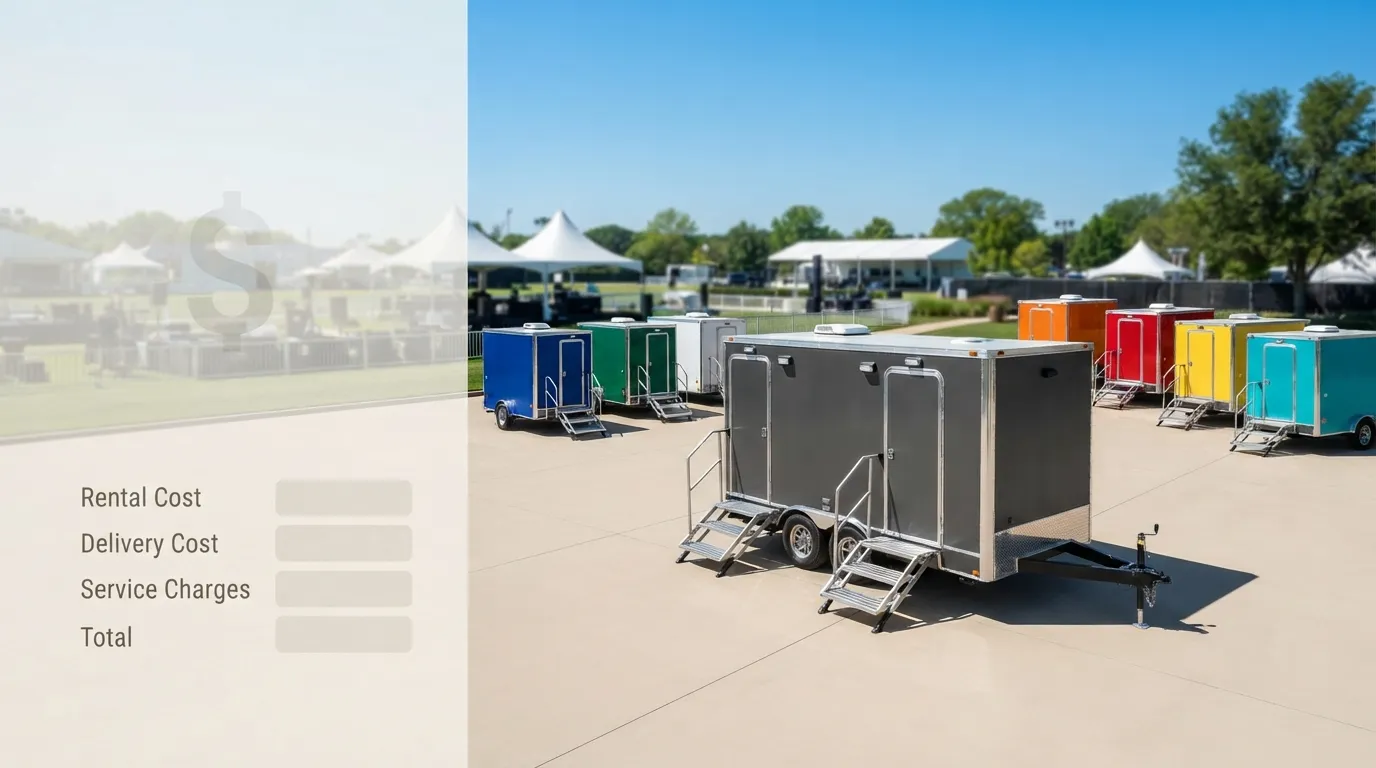
Cost depends on unit mix, trailer needs, and how many days the fair runs. Check porta potty rental cost and restroom trailer rental cost for pricing structure, then request a quote with your attendance estimate and site map for an exact count.
Next step
Get a delivery date
Tell us the address, the dates and the headcount. We size the order and confirm the route.